

Most creators do not need a massive audience before they can make money from social media. They need a clear audience, a reason people trust them, and a monetization method that matches their current stage.
Follower count can help, but it is not the whole business. A creator with 5,000 specific followers can earn more than a creator with 100,000 passive followers if the smaller audience has a clear problem, trusts the creator, and is willing to act on recommendations.
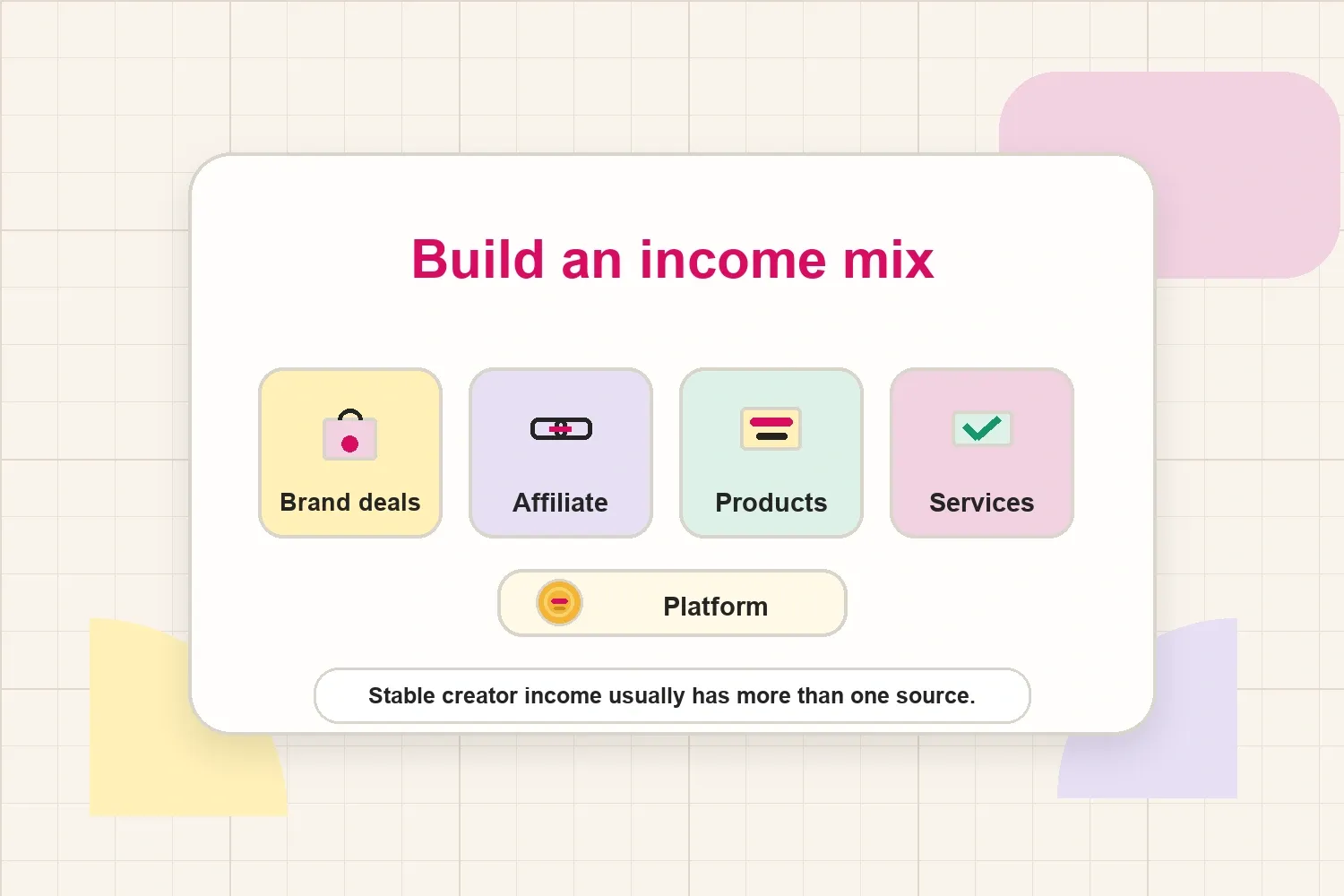
The safest way to monetize social media is to treat it like a system: build trust, show proof, choose one first income stream, then add more once you know what converts. This guide covers the 12 ways that work in 2026, what each platform requires before it pays you directly, and what creators realistically earn at each audience size.
What does it mean to monetize social media?
To monetize (or monetise) social media means turning your content, audience, skills, influence, or personal brand into income. That income can come from the platform itself, from brands, from your own products, or from people who hire you because your content proves you can help.
Platform payouts can be useful, but they should not be the only plan. Eligibility rules, payouts, reach, and program names change often. X retired its Creator Revenue Sharing program in September 2026 and replaced it with a new rewards program, and YouTube raises its entry thresholds for new applicants in February 2027. Treat these programs as one revenue stream, not the whole creator business.
Understand why people follow you
Before choosing a monetization method, ask why people follow you. Do they want education, entertainment, product discovery, inspiration, accountability, access to your taste, or help solving a specific problem?
Your offer should match that reason. A study creator can sell templates or promote education tools. A photographer can sell presets or editing services. A fitness creator can offer coaching or workout plans. A beauty creator can use affiliate links or brand deals when the recommendations fit the content.
What each platform requires before it pays you
Direct platform payouts are the only income stream with hard thresholds. The table below summarizes the official requirements as of October 2026. Every program also requires an eligible country, an adult account in good standing, and a linked payout account.
| Program | Minimum to qualify |
|---|---|
| YouTube Partner Program (ads, Premium) | 1,000 subscribers plus 4,000 public watch hours in 12 months or 10 million Shorts views in 90 days |
| YouTube Fan funding and shopping tier | 500 subscribers, 3 public uploads in 90 days, 3,000 watch hours or 3 million Shorts views |
| TikTok Creator Rewards | 10,000 followers, 100,000 views in 30 days, original videos over 1 minute |
| Instagram Gifts on Reels | 500 followers and a professional account |
| Instagram Subscriptions | 10,000 followers and a professional account; bonuses are invite-only |
| Facebook Content Monetization | Page or professional mode, partly invite-only; 10,000 followers and 600,000 minutes viewed in 60 days are the commonly reported bar |
| Snapchat Spotlight rewards | Invitation only for Snap Stars, Spotlight videos of 30 seconds or more |
| X Original Content Rewards | Premium subscription; replaced Creator Revenue Sharing in September 2026 |
Two notes on the YouTube row. Watch hours only count from long-form public videos, so Shorts views do not help the 4,000-hour route. And from 1 February 2027, new applicants need 8,000 watch hours or 20 million Shorts views for ad revenue, while the fan-funding tier stays unchanged. The official YouTube Partner Program help page and TikTok's Creator Rewards Program page carry the current rules, and the TikTok monetization guide walks through the TikTok programs in detail.
Everything else on this list, from brand deals to digital products, has no follower threshold at all. That is why most creators earn their first money outside the platform programs.
12 ways to make money from social media
1. Brand deals
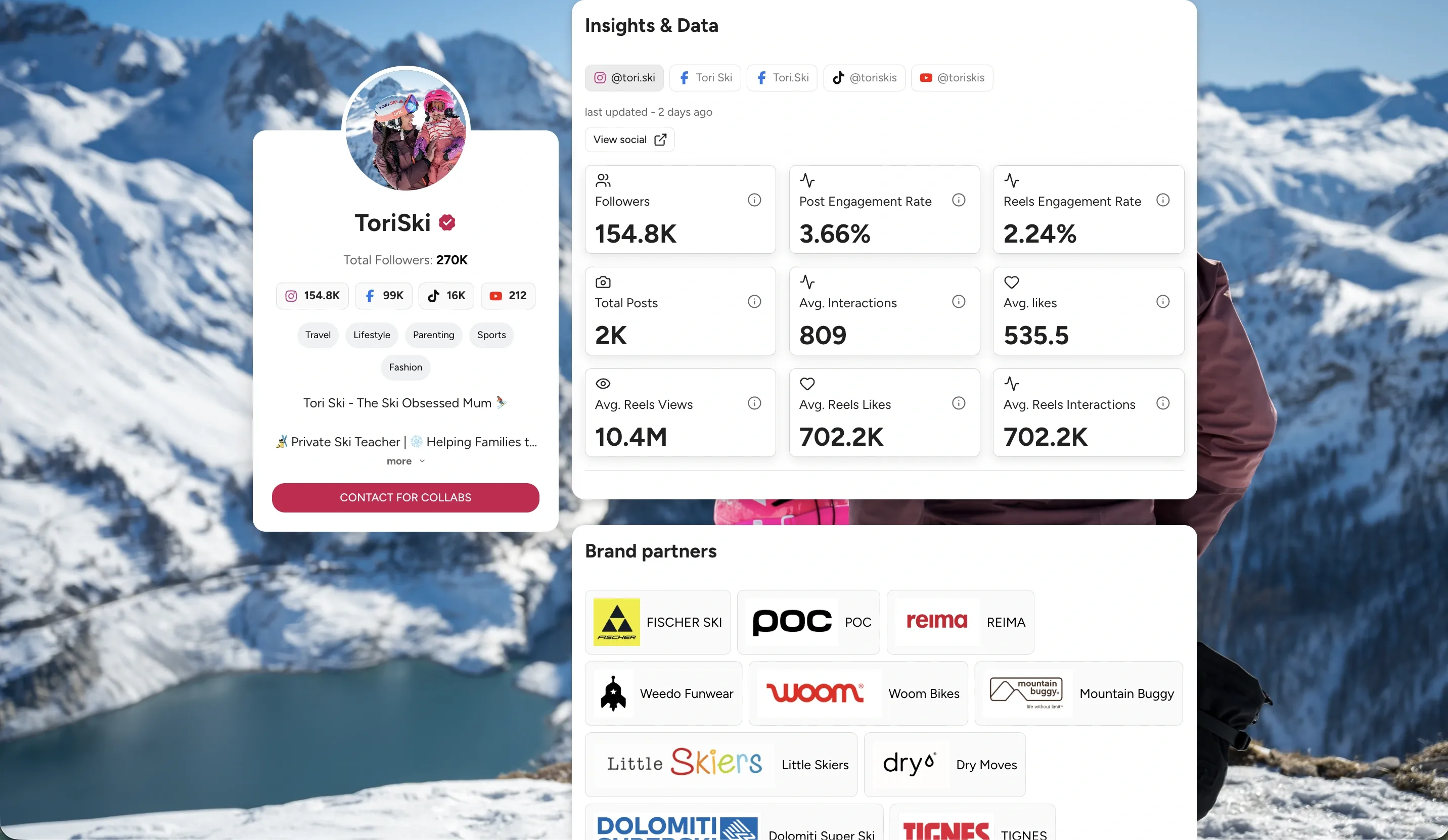
A company pays you to create content that promotes a product, service, app, destination, event, or campaign. The best brand deals feel natural because the product fits the creator's audience. Instead of pitching only follower count, show the brand who your audience is, why the topic fits, what content you can create, and what result your content can support.
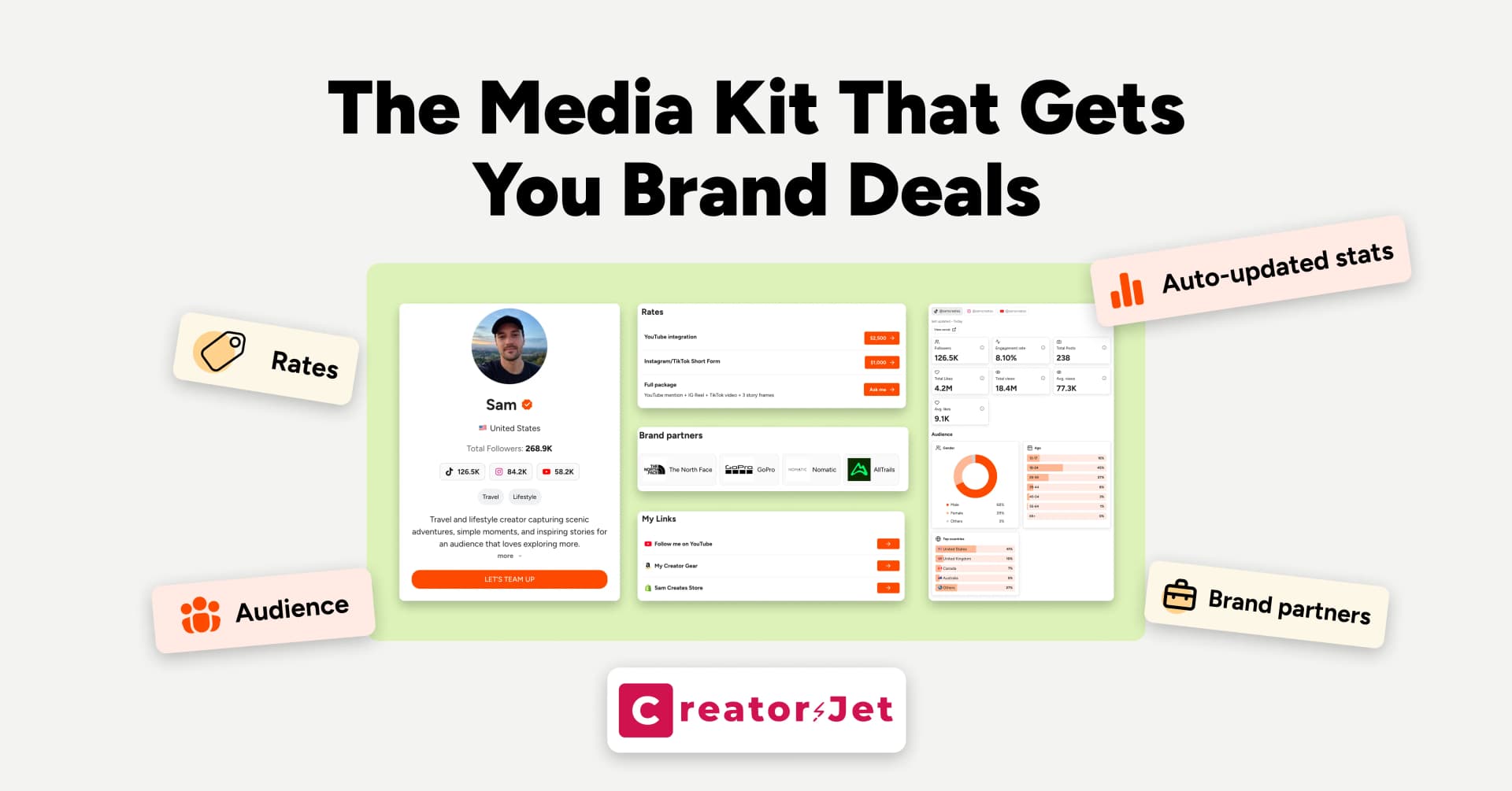
A professional influencer media kit makes this easier because it gathers your platforms, audience, engagement, examples, and collaboration details in one place.
2. Sponsored posts and integrations
A mention of a product inside a Reel, TikTok, Short, Story, newsletter, or YouTube video. Pricing depends on more than followers: platform, format, niche, engagement, production quality, usage rights, exclusivity, turnaround time, and whether the brand wants to reuse the content in paid ads all matter. A Story is not priced like a Reel, and organic posting is not the same as paid usage. If you need a starting point, the Instagram pricing calculator estimates a rate before you adjust for scope and rights.
3. Affiliate links and codes
You earn a commission when someone buys through your link or uses your code. Affiliate marketing works when your audience already trusts your recommendations. The useful version is not dropping random links. It is explaining who the product is for, why you use it, what problem it solves, and when it is not the right fit. Affiliate income can grow over time when the content keeps getting views through search, YouTube, Pinterest, newsletters, or evergreen social posts.
4. UGC for brands
UGC means creating content for brands to use on their own channels. You may not need to post it on your account, which makes it useful for creators who can make good short-form content but do not yet have a large audience. Newer UGC creators typically charge $100 to $300 per video and experienced ones $300 to $750 or more, with usage rights and extra hooks priced on top. The guide on how to price UGC videos covers the packaging.
5. Services
Sell audits, strategy, editing, photography, coaching, tutoring, or consulting. Services can be the fastest money for a skilled creator with a small audience. A designer can sell audits, a photographer can sell shoots, a marketer can sell strategy, a student creator can sell tutoring, and a fitness creator can sell coaching. In these cases, content acts as proof of skill.
6. Digital products
Templates, presets, guides, spreadsheets, Notion dashboards, workout plans, study systems, checklists, and mini courses work well when your audience repeatedly asks how you do something. Start small. A simple product that solves one painful problem is usually a better test than a huge course with no proof of demand.
7. Subscriptions
Paid access to exclusive content, resources, or a private newsletter. Subscriptions create more predictable income, but people need a reason to keep paying every month. They work best when the audience wants ongoing access to your knowledge, process, resources, accountability, or network. If that promise is not clear yet, start with a simpler offer first.
8. Paid communities
A group where people pay for accountability, feedback, or access to you and to each other. Communities suit creators whose followers already talk to each other in comments and DMs. The product is the room, not the content, so moderation and a clear weekly rhythm matter more than production quality.
9. Platform revenue
YouTube ads, TikTok rewards, Facebook content monetization, creator programs, and bonuses when eligible. Use them when they are available, but build other paths around them: they are exposed to rule changes and payout changes, as the X and YouTube changes this year show. The YouTube money calculator models what ad revenue looks like at a given view count.
10. Fan monetization: gifts, tips, Stars, and badges
Real-time support from your audience: TikTok LIVE gifts, Instagram gifts on Reels, Facebook Stars, YouTube Super Chat and channel memberships, Twitch subscriptions. Fan monetization pays best for creators who show up live on a schedule, because the income is tied to a moment, not a post. The platform keeps a share of each gift before conversion, so the amount a fan spends is never the amount you receive.
11. Physical products or merch
Sell products when your audience has a clear identity or need. Merch works for communities with an inside joke or a shared identity. Physical products work when the creator already recommends a category and can design a better version of it. Print-on-demand keeps the test cheap.
12. Usage rights and licensing
Charge brands to reuse your content in ads, landing pages, or social campaigns. Usage rights are the most under-priced line in creator deals: a brand that runs your video as a paid ad for 90 days is buying media, not a post, and a 30% to 100% uplift on the base fee is normal. Always separate organic posting from paid usage in your quotes.
How to choose your first path
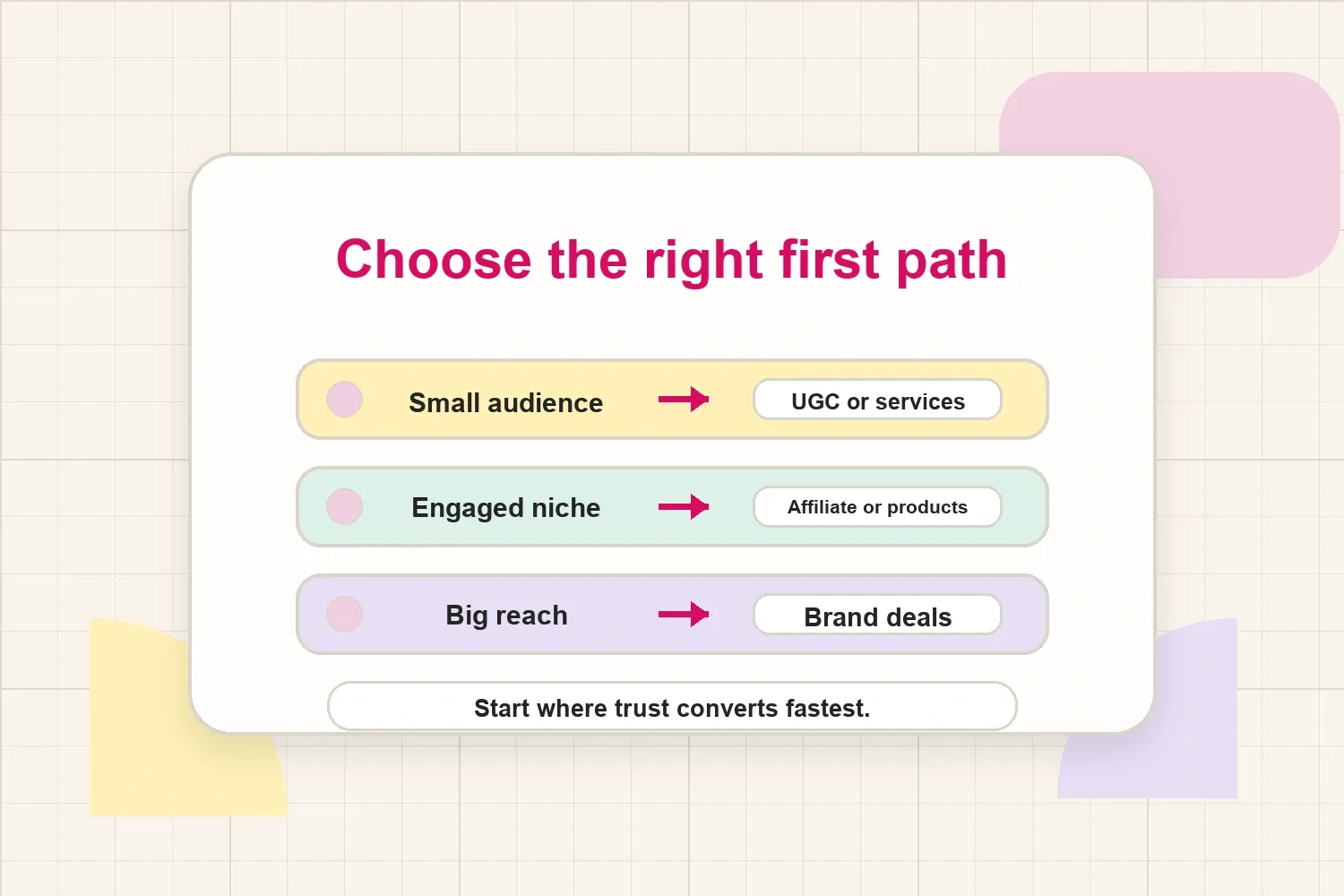
Do not try to launch every income stream at once. Pick the route that best matches your current audience and proof.
- Skills but little reach: UGC or services. Content is your portfolio, not your distribution.
- An engaged niche under 10,000 followers: affiliate content and a small digital product.
- An audience that asks for your process: digital products, then a subscription or community once demand is proven.
- Clear reach and proof: brand deals and sponsored integrations, with usage rights priced separately.
- A live, loyal audience: fan monetization and memberships on top of the above.
How much can you make from social media?
Earnings depend on niche, platform, and proof more than on follower count, but ranges help. The figures below come from our influencer rates by platform research and the UGC pricing guide, and they describe one sponsored post, video, or integration, not monthly income.
| Audience size | Instagram post | TikTok video | YouTube integration |
|---|---|---|---|
| 1,000 to 10,000 | $50 to $250 | $25 to $200 | $50 to $500 |
| 10,000 to 100,000 | $250 to $1,500 | $150 to $1,200 | $200 to $1,500 |
| 100,000 to 500,000 | $1,500 to $5,000 | $800 to $6,000 | $1,000 to $10,000 |
| 500,000 and above | $5,000 to $12,000 | $4,000 to $15,000 | $5,000 to $20,000 |
Three things change these numbers in practice. Niche: finance, B2B, and tech pay several times more than general lifestyle for the same audience. Format: a YouTube integration with a dedicated segment costs more than a mention. Rights: paid usage, exclusivity, and raw files are quoted on top of the base fee. A creator with 20,000 followers who does two sponsored posts, a UGC retainer, and affiliate income can reach a full-time income long before platform payouts matter.
How many followers do you need?
There is no fixed follower number required to monetize social media. The platform programs start at 500 to 10,000 followers, brand deals and UGC start at zero, and services start whenever your content proves a skill. A small creator can earn with a narrow niche and a useful offer. A large creator can struggle if the audience is broad, passive, or unclear.
A better question is: do people understand what you help with, do they trust your recommendations, and do you have a clear next step for someone who wants more?
A 30-day plan to start making money from social media
- Week 1: pick one path from the list above based on your audience size and proof, and write a one-line offer.
- Week 2: build the proof. A media kit with your audience data, three content examples, and a rate or price. For UGC and services, three sample pieces made for fictional or past clients count.
- Week 3: make ten asks. Ten brand pitches, ten service proposals, or one product launch to your audience. Track replies, not feelings.
- Week 4: adjust the offer based on what people answered, then repeat with the next ten. Add a second income stream only after the first one has paid you twice.
Bottom line
Start with one monetization path that fits your current stage. If you have skills but little reach, try UGC or services. If people ask for your process, test a digital product. If your audience trusts your recommendations, try affiliate content. If you have proof and audience fit, pitch brands.
Once one path works, add another. That is how social media becomes a more stable creator business instead of a race to chase the next viral post.